01
The imaginary is not spontaneous
Where do ideas actually come from?
Students map references, memory, and cultural inputs already shaping their work.
Output: a first map of personal references and influences.
 NORTE
NORTE
Education for creative institutions
Construção do Imaginário is a four-session programme for art students and creative contexts. It uses AI to examine perception, references, tension, and decision-making—not to generate finished work.
Students learn to identify what is already shaping their work before they produce it.
This is not software training and it does not use AI as a shortcut. AI enters as a critical support tool for questioning, contrast, analysis, and conceptual structure.
Where do ideas actually come from?
Students map references, memory, and cultural inputs already shaping their work.
Output: a first map of personal references and influences.
How does interpretation shape form?
Students produce multiple readings of the same source and examine the filters behind each one.
Output: contrasted interpretations from a single source.
What tensions are already structuring the work?
Conflict, contradiction, and pressure are identified and translated into usable form.
Output: a piece or sketch built from identified tensions.
What can become language and authorship?
Students organise recurring patterns, references, and decisions into a repeatable way of thinking.
Output: an initial personal creative system.
How AI is used
AI helps organise thought, expose patterns, create contrast, and generate sharper questions when students are trapped inside one reading.
Questioning tool · Conceptual mirror · Structure support · Contrast mechanism
Shortcut · Authorship replacement · Automatic art generator · Ready-made aesthetic solution
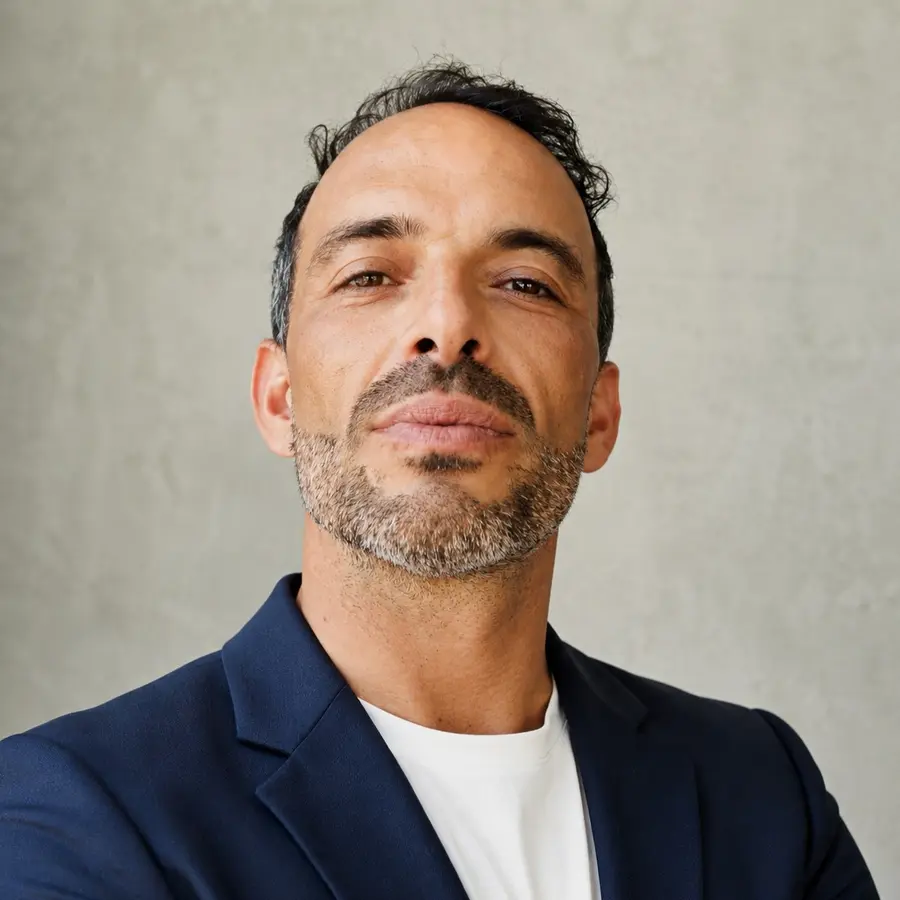
I’m Diogo Galvão.
I bring experience from operations, tourism, delivery, communication, and systems—fields where good work quickly loses coherence when information, responsibility, and judgment remain loose.
Training across Media & Society, NLP, coaching, and sales supports the programme’s focus on language, attention, behaviour, interpretation, and human decision.
The aim is not to make students dependent on tools. It is to help them recognise what is already organising their work and use technology only where it strengthens authorship.